





Personal Breed Introduction
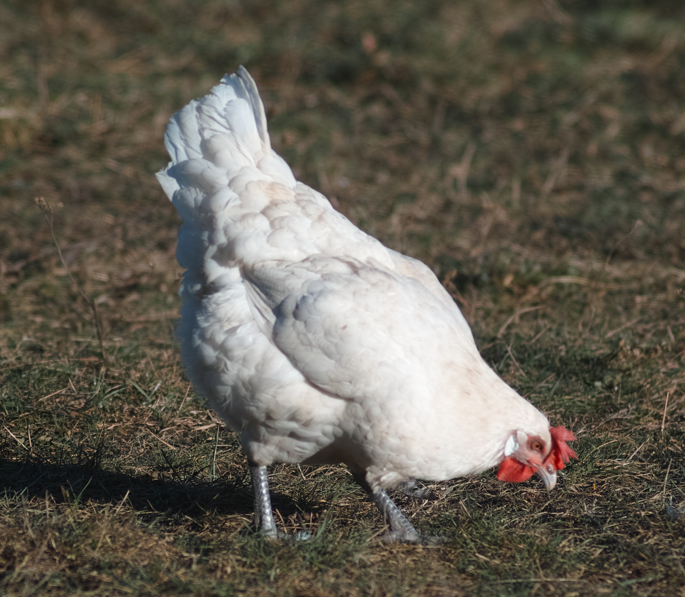
Bresse is the first breed I review on this website, and that for a reason. They are represented by most pieces in my flock. The Magnificent 7. I also had 7 Bresse roosters, and I still have 2 left as I write this piece. And I must say I am more than happy with them. Best laying ability from my flock, excellent meat quality as well as hardiness. Yes there are some downsides as I already noted in advantages and disadvantages above but the advantages by far outweigh the disadvantages.
And I do not even have the best Bresse bloodline. Some of them have these brownish feathers on their chest and sides. One hen is growling like a damn angry dog. Another one, the flock hooker doesn’t even have any feathers on her back (she is the rooster rag). But they are still great layers and as hardy as it gets so I do not really care about it. I didn’t get them to go to competition but to get quality eggs and meat which they can fullfil perfectly. I did get the Adams family “Large” growler and one serious hooker as a bonus.
The Origin Story (Ancestry & History)
Bresse Gauloise is a living piece of French history, originating in the Bresse region (the departments of Ain, Saône-et-Loire, and Jura) of France, for over 500 years. While its exact birth date is lost to time, the breed was first formally described as a distinct, superior landrace in the late 1500s. It was developed by local farmers who selectively bred the indigenous white, black, and grey fowls of the region for dual-purpose efficiency. Unlike many modern breeds that rely on complex crossbreeding of Asian and English stock, the Bresse is a “refined landrace”—a product of the specific limestone-rich soil and insect-heavy pastures of the Bresse valley, which many believe is what gives the bird its uniquely fine bone structure and marbled meat.
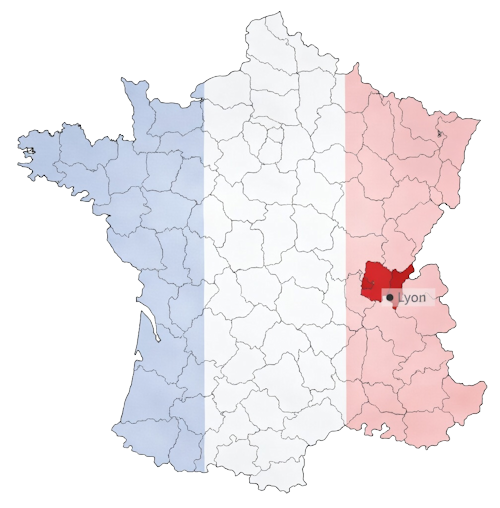
The breed is also known for having the colors of the French flag: red (the comb), white (the feathers), and blue (the distinct steel-blue legs) which is especially appreciated by French patriots, which like Bresse are rarer each year. Its legendary status was cemented in the early 20th century by breeders like Cyrille de Borde, who helped standardize the “White Bresse” (Bresse de Bény) that we see today. In 1957, it became the only poultry breed in the world to be granted AOC (Appellation d’Origine Contrôlée) status, legally protecting the name and requiring the birds to be raised on a specific diet of corn, buckwheat, and dairy products.
The King’s Favorite (The “Poulet de Bresse” Legend)
A popular story from French lore tells of King Henri IV in the late 16th century. After tasting the bird, he was so impressed by its succulent flavor that he famously declared his wish for every peasant in his kingdom to have a “poule au pot” (chicken in the pot) every Sunday. While the king wanted general prosperity, the “chicken” he specifically had in mind was the Bresse. To this day, it is often called the “Queen of Poultry and the Poultry of Kings.”
The “Blue Foot” Status Symbol
In high-end Parisian markets during the 1800s, Bresse was so highly valued that unscrupulous vendors would try to paint the legs of regular chickens blue to pass them off as authentic Bresse. This led to the tradition of selling the birds with the feet still attached and the feathers on the head, as a “Certificate of Authenticity” for the buyer. Even today, at the Glorieuses de Bresse (the annual poultry competition), the birds are presented in a white linen corset that compresses the fat into the meat, but the blue legs are always left visible as the ultimate mark of quality and authenticity.
So why 1904 as the Bresse Gauloise’s Year of Origin?
For hundreds of years, the Bresse was just a local “type” of chicken. Farmers in the Bresse region kept birds that had blue legs and white feathers because they tasted better on that specific soil. However, they weren’t uniform. You might find a bird with a floppy comb, one with a smaller body, or variations in leg color. There was no “rulebook.”
In the late 1800s, specialized poultry shows became a huge trend in Europe. French breeders realized that if they didn’t “standardize” their local birds, they would lose out to imported English and Asian breeds. In 1904, the Bresse Club was founded. They took the best examples of these ancient landrace birds and wrote down the “Standard of Perfection.” They decided exactly how many points the comb should have, the specific shade of steel-blue for the legs, and the weight requirements. This effectively “locked” the genetics of the old landraces into the formal Bresse Gauloise breed we recognize today.
What Exactly is Standardized Heritage?
Most popular breeds (like the Rhode Island Red or Orpington) are “cocktails.” Breeders in the 1800s took 4 or 5 different birds from China, Italy, and England, combined them, and created a new breed.
Bresse is different. In 1904, they didn’t “create” it; they refined it. They took the ancient birds already living in those French villages and simply stopped breeding the “ugly” ones. It is much more of a heritage landrace because its DNA hasn’t been diluted by outside “modern” breeds.
Standardized breeds (like show Silkies or Cochins) are often bred for looks at the expense of health or meat quality. The Bresse was standardized for performance. The 1904 rules were designed to protect the birds’ ability to:
- Convert local corn and insects into marbled fat.
- Maintain that specific fine bone structure (which makes for a better meat-to-bone ratio).
- Keep the blue legs (which was the natural marker of the local soil’s mineral impact).
That is why Bresse is considered as a Standardized Heritage.
- Heritage: Because it belongs to the land and hasn’t changed much since the 1500s.
- Standardized: Because in 1904, they wrote down the “rules” to make sure nobody accidentally ruined it with outside breeding.
It’s essentially a protected primitive breed. This is why their PEQ (Potential Egg Quality) and meat quality remain so consistent, they haven’t been “messed with” by modern commercial interests.
Physical Blueprint (The Hardware)
To maintain its AOC (Appellation d’Origine Contrôlée) status, which is a legal “law of the land” in France, and not just a breeder’s suggestion, the Bresse must follow strict rules. If a farmer breaks any of these rules, they can’t use the name “Bresse Gauloise.” Here is the breakdown of the SOP traits and the AOC legal requirements:
1. Flag: Appearance (SOP Traits)
The Bresse is the only bird bred to look like the French Tricolour. The Standard of Perfection (SOP) requires:
- The Comb (Red): Must be a single comb, large, with deep serrations. In hens, it famously “falls” to one side, while in roosters, it must stand perfectly upright.
- The Feathers (White): Must be completely snow-white. The texture is fine and silky rather than stiff or waxy, which reflects their skin quality.
- The Legs (Blue): This is the “Steel Blue” or “Slate Blue” color. It is not just surface color; it’s a result of the thin, fine scales unique to the breed.
- The Eyes: They must be very dark (black or dark brown), giving them a “piercing” look compared to the orange eyes of most common chickens.
2. AOC Legal & Laws
The AOC (established in 1957) dictates exactly how the bird must live and die. It covers four main areas:
- The Geography: The birds must be raised within a specific 100km x 40km area in the Bresse region. If you hatch the same egg in Paris, it’s just a “Gauloise,” not a “Bresse.”
- The Space (The “10-Meter Rule”): Each bird must have at least 10 square meters of high-quality, insect-rich pasture. This ensures the “Foraging Intake” score in our PEQ math stays high.
- The Diet:
- Phase 1: They eat mostly insects and grass they find themselves.
- Phase 2: They are finished on a mash of local white maize (corn) and buckwheat soaked in skimmed milk. No soy or “industrial” proteins are allowed.
- The “Finishing” (Épinage): For the last 2–4 weeks, the birds are kept in wooden cages (épinettes) in a darkened room and fed only the milk/maize mash to “marble” the meat with fat.
Color Palette: Regional Specialists
The White (Bény) is the most refined and sits at the top for Production Logic, having been bred for maximum egg and meat output. However, the Black (Louhans) is widely considered the “Iron Bird” of the family. Because it was less focused on by commercial breeders, it retained a much higher cold hardiness and a slightly more “wild” foraging drive. The Grey (Bourg) is a heavy-hitter; it traditionally has a slightly larger frame and a more docile temperament, making it an excellent dual-purpose choice for those who prioritize meat volume. Finally, the Blue variation is the rarest—a striking, slate-colored bird that is genetically similar to the Black but often prized as a heritage showpiece.
The Genetic “Wilderness” Gap
In our PEQ Audit, the color makes a real impact on Metabolic Stress. The black and grey varieties often show a higher embryonic vigor because their gene pool hasn’t been as tightly squeezed for “maximum white feathers.” While the White Bresse is a professional athlete that needs high-quality maize to hit its peak, the Black and Grey versions are “off-roaders”—they are slightly more forgiving of lower-quality forage and have a higher rain tolerance due to their historically rugged farm upbringing.
Hardiness Clues for Gauloise
At its core, this is a rugged, ancient farm bird built for survival before it was ever built for the dinner table.
1. Climate Hardiness
Because they were developed in the Bresse valley—which suffers from damp, chilly winters and humid summers—they are surprisingly “weatherproof.”
- Cold Tolerance: Their large combs are the only weak point (prone to frostbite in extreme sub-zero temps), but their tight, dense feathering keeps them remarkably warm. However the comb of hens folding over comb actually protects its own “tips” against the hen’s warm head, reducing the amount of skin exposed to freezing air.
- Heat Resilience: Unlike heavy, “meat-only” breeds (like Cornish Cross) that keels over in the sun, the Bresse is lean and active. They handle heat well as long as they have shade, partly due to their Mediterranean-style ancestry.
- Rain Resilience: The streamlined feather structure acts like a natural raincoat, allowing water to bead off quickly and preventing the bird from becoming waterlogged or chilled to the bone. Because they evolved in the damp, humid Bresse valley, they don’t retreat to the coop at the first sign of a drizzle; they are notorious for staying out in the rain to hunt for worms and slugs that surface in wet soil.
2. Physical “Engine” & Structure
Bresse is built like a light-middleweight athlete, not a heavyweight bodybuilder.
- Fine-Boned: This is their most famous trait. They have very thin, delicate bones. In our PEQ Math, this relates to high metabolic efficiency—the bird puts energy into “nutrients” (eggs/meat) rather than building a heavy, clunky skeleton.
- Thin Skin: Their skin is famously “paper-thin” and white (not yellow), which allows the fat to marble directly into the muscle rather than just sitting under the skin.
- Foraging Instinct: They have an almost “wild” drive to hunt. If you put a Bresse in a coop, they get stressed; if you put them in a field, they will find 60-70% of their own protein. Unlike some lazy heavy breeds, Bresse hens are highly motivated. They are known to scratch through light snow to find grit and dormant bugs, keeping their Foraging Intake score active even in the “off-season.”
3. Vitality & Lifespan
- Early Maturers: They grow incredibly fast for a heritage breed. Pullets often start laying at 18-20 weeks, which is unheard of for most landrace birds.
- High Foraging Intelligence: They are “predator-aware.” Because they were raised for centuries on open French pastures with hawks and foxes, they are much “smarter” and more alert than a typical Rhode Island Red or Orpington.
Production Logic: High-Octane Performance
The Bresse Gauloise isn’t just a “pretty bird” for the table; it is a high-output machine that functions like a heritage version of a modern layer. While most heavy heritage breeds take 6 to 8 months to start laying, the Bresse is an early bloomer, often hitting its stride by week 18 or 20. They don’t just “leak” eggs occasionally; they are remarkably consistent, averaging 220 to 250 eggs per year. This reliability is what keeps our Efficiency Score high, they don’t have “off months” where they sit around eating feed without giving anything back.
The Egg: Liquid Gold in a Cream Shell
The magic of the Bresse egg lies in its yolk-to-white ratio, which is significantly higher than an average supermarket egg. Because of their obsessive foraging, they pack their yolks with xanthophylls and omega fatty acids, resulting in a deep, “sunset orange” color and a rich, velvety texture. The shells are exceptionally dense and smooth, which acts as a natural vacuum seal. This superior shell quality leads to a longer shelf life and better protection, ensuring the “Potential Egg Quality” remains peak from the nest box to the kitchen.
The Cost (FCR): The Self-Sufficient Athlete
In the world of Feed Conversion Rate (FCR), the Bresse is the opposite of an “expensive diva.” They are built like lean athletes with a high-speed metabolism that thrives on variety. While commercial hens need a specific, expensive pellet to perform, Bresse hens view your grain bin as a “supplement” to the buffet they find in the field. They are expert foragers that can offset 50% or more of their caloric needs through grass, seeds, and insects. This makes their “Cost per Egg” incredibly low for a heritage breed, as they turn “free” landscape energy into high-value protein.
The Gourmet Engine: Unparalleled Marbling & Scientific Merit
The Bresse Gauloise is scientifically distinct from modern poultry due to its Intramuscular Fat (IMF) deposition, commonly known as marbling. While industrial broilers are bred for “lean bulk”, often resulting in an IMF content of less than 2% in breast muscle, the Bresse operates on a “slow-growth” biological clock that allows lipids to weave directly into the muscle fibers. This marbling is further enhanced by the mandatory AOC “finishing” phase, where birds are fed a milk-and-maize mash that effectively “pastry-feeds” the muscle, creating a buttery texture and a unique, sweetish aromatic profile that modern fast-growing strains cannot replicate.
From a biochemical standpoint, Bresse meat is characterized by a superior fatty acid profile. Studies on slow-growing lines like the Bresse Gauloise show significant differences in lipid composition, with pasture-raised birds exhibiting a much lower n-6/n-3 ratio, a key marker for heart-healthy nutrition, compared to conventional birds. Additionally, their meat contains higher levels of long-chain polyunsaturated fatty acids (PUFA) and essential microelements, which contribute to the “unmatched” depth of flavor often described by chefs as being in a class of its own.
When it comes to the table, the Bresse rooster is the rare exception where the male meat is often considered superior to the hen’s. Because of their unique metabolic efficiency and that high testosterone, their muscle develops a deeper, more complex “gamey” flavor without becoming tough or stringy. In traditional French cuisine, the Chapon (castrated rooster) or the young Coq is the gold standard because their fine bone structure allows for incredible intramuscular fat marbling, creating a succulent, buttery texture that a standard hen simply can’t match.
Flock Dynamics (Temperament & Nature)
Bresse Gauloise is a highly intelligent “working” bird that operates with a sharp, tactical mindset. In Flock Dynamics, they are assertive but rarely “bullies.” They quickly establish a clear, functional pecking order because they are too busy foraging to waste energy on constant infighting. Their predator awareness is elite; they possess a “wild” alertness that most domestic breeds have lost. They don’t just scatter blindly; they utilize a sophisticated Acoustic Footprint, using specific high-pitched alarm calls to alert the flock to aerial threats (hawks) versus ground threats (foxes).
When it comes to human interaction, don’t expect a lap-dog. The Bresse is a “flighty worker”—they are curious and will follow you around hoping for treats, but they value their personal space. They aren’t aggressive, but they are reactive; if you move too fast, they’ll vanish. This “flightiness” is a survival asset—it’s the same lightning-fast reflex that keeps them alive on open pasture.
In the poultry world, Bresse roosters are known for having a “high-octane” libido that is significantly higher than your average backyard breed. This high testosterone makes them incredibly attentive protectors, but it also means they can be more assertive and territorial within the flock dynamics. They aren’t necessarily “mean,” but they are high-energy “alphas” who take their job of managing the hens and defending the territory very seriously.
Regarding Broodiness, they follow a strict “Production Logic.” They have been bred for centuries to keep laying, so their maternal logic is low. They rarely go broody, preferring to stay on the “assembly line” of egg production rather than sitting on a nest for three weeks.
Because they haven’t been weakened by industrial breeding, Bresse eggs possess a “wild” embryonic vigor that makes them incredibly resilient during incubation. As a standardized landrace, they have retained a thick, high-calcium shell and a nutrient-dense yolk that provides a superior fuel source for the developing chick, leading to high hatch rates even in less-than-perfect conditions. This maternal logic at the cellular level means the embryos are “hardy” against temperature fluctuations, resulting in chicks that hit the ground running with a much higher baseline vitality than modern commercial strains.
The Rivalry Audit (Comparison “Versus”)
When comparing the Bresse Gauloise to other white-feathered powerhouses like the Leghorn, you are looking at a battle between a “Heritage High-Performance” machine and an “Industrial Efficiency” specialist. While several breeds can match or beat the Bresse in raw egg numbers, few can rival its balance of foraging intelligence and meat quality.
1. Head-to-Head: Bresse vs. Leghorn
The White Leghorn is the world’s undisputed egg-laying champion, often producing 280 to 320+ large white eggs annually. In contrast, the Bresse averages 220 to 250 cream-colored eggs.
- Foraging Logic: While Leghorns are excellent foragers, they have been selectively bred for commercial environments, meaning they often prioritize “efficiency” (staying near the feeder) to keep their energy for laying. The Bresse retains a “wilder” foraging drive, roaming further to find a higher percentage of its own protein.
- The PEQ Difference: Leghorn eggs have a standard commercial yolk-to-white ratio. The Bresse egg is denser with a richer, larger yolk, specifically fueled by that deeper foraging range.
2. The Rival: The Egyptian Fayoumi
If you want a white bird that rivals the Bresse in hardiness and foraging, the White Fayoumi is a top contender.
- Foraging Supremacy: This ancient breed is arguably the best forager in the world; they are essentially “semi-wild” and can survive almost entirely off the land.
- The Trade-off: While they are predator-savvy and tough, they lay smaller white eggs and significantly fewer of them (about 150-180/year) compared to the Bresse. They also lack the Bresse’s meat quality, as they are lean, small-bodied birds.
- Desert Specialist: While the Fayoumi is virtually bulletproof in 40°C heat and high-disease environments, it falls apart in the exact conditions where the Bresse thrives, in cold and rainy weather.
3. The Rival: White Australorp
- Originally developed for extreme laying performance in Australia, the White Australorp is a heavy-hitting dual-purpose rival.Output: They can lay 250 to 300 brown eggs per year, rivaling or exceeding the Bresse.
- The Trade-off: They are much more docile and “heavy”. While they forage well, they lack the “flighty” alertness and predator evasion skills of the Bresse. In a high-predator pasture, a Bresse will usually out-survive an Australorp.
The Personal Audit (Experience & Conclusion)
My experience can only confirm most of the above. Even though I cannot call my members of this famous breed Bresse Gauloise, only Gauloise, I am extremely happy with them so far. And it will be extremely hard to overcome or even match its unbelievable dual-purpose effectiveness. I picked for comparison Leghorn, Egyptian Fayoumi, and Australorp, but there are some breeds that in the future may rival it. Like the Austrian Sulmtaler, which I am planning for my next flock, which can rival it in fat marbling and meat quality.
Bresse Gauloise earned its high marks because it is not just an excellent all-rounder. It is excellent in the most important factors for me. Yes, there are some downsides, like the high libido of roosters, their flock can be noisier than average, and the bloodlines vary a lot. But if you are lucky and get a quality bloodline, it is a benchmark bird.
Below you can find a table with a breakdown of the scores in the various groups that I was evaluating. As always, I used AI to go through various scientific papers to get as much accurate info as possible. Anything else was estimated and calculated, and then also adjusted according to my own experience.87.284.4